
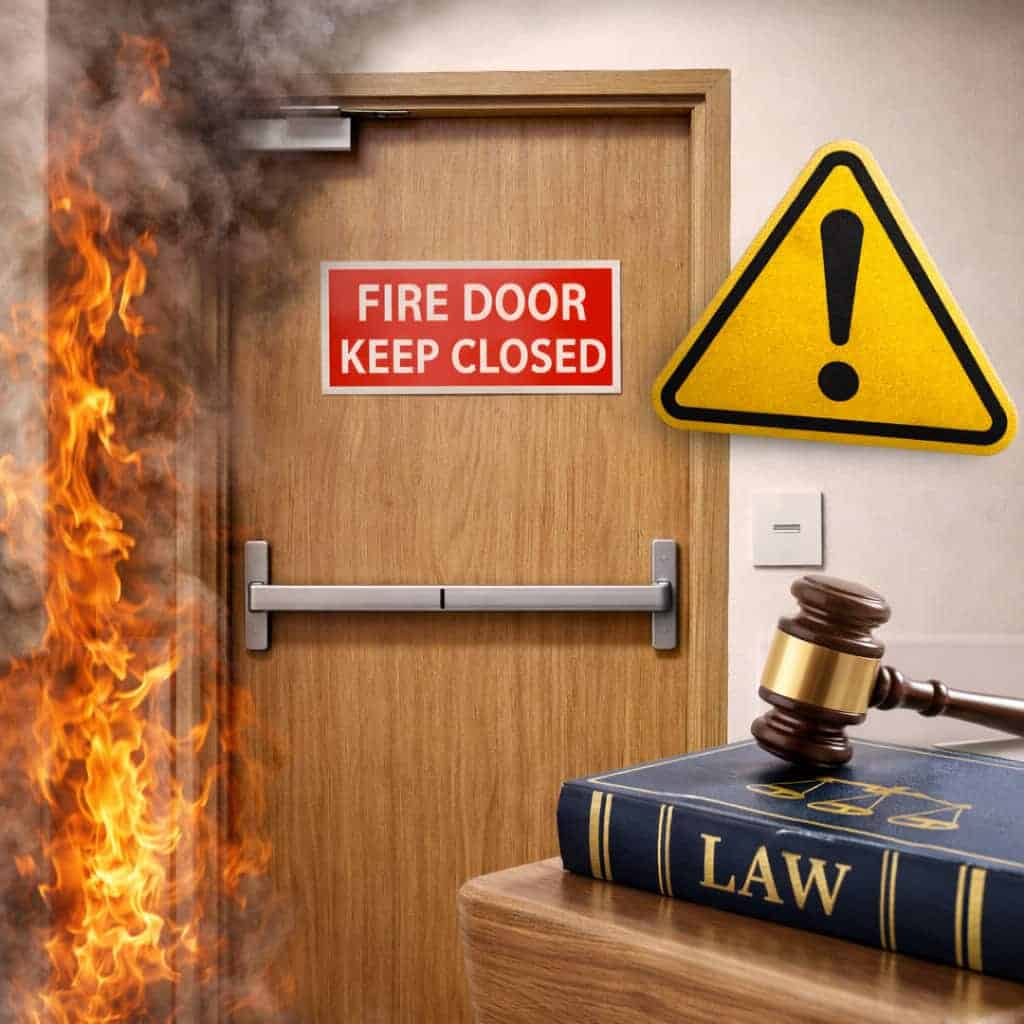
A fire door is a specially constructed door designed to resist the spread of fire and smoke, and it is required by law in many types of buildings, depending on local fire codes and safety regulations.
Table of Contents
ToggleFire doors play an essential role in protecting people and property during emergencies. Despite that, many property owners are unsure when they’re needed or how they function. Understanding fire doors isn’t just about compliance; it’s also about safety, risk reduction, and proper building design. In this guide, we’ll explain what fire doors are, why they matter, and the key components that make them effective. We’ll also explore the different types of fire doors available and topics like legal requirements, installation standards, and the benefits of regular maintenance.
What is a Fire Door?
A fire door is a door assembly specifically designed to withstand fire for a designated period of time, usually ranging from 20 minutes to several hours. These doors are built using fire-resistant materials, such as steel, gypsum, or specially treated wood.
Fire doors are an important part of a building’s passive fire protection system. Their primary purpose is to compartmentalize fire, slowing its spread and giving the building’s occupants more time to safely evacuate.
According to the National Fire Protection Association (NFPA), fire doors are engineered to meet strict fire-resistance ratings. They’re also tested under controlled conditions to ensure that they perform effectively during emergencies.
Why Fire Doors Matter in Building Safety
There are a couple of reasons why fire doors are an integral part of building safety.
Preventing the Spread of Fire and Smoke
Fire doors are essential for controlling the movement of smoke and flames within a building. When they’re properly installed and maintained, these doors create a barrier that can contain fire in a specific area.
According to the U.S. Fire Administration, smoke is responsible for the majority of fire-related deaths. This is another reason why containment systems like fire doors are so critical for building safety.
Protecting Occupants and Property
Fire doors also provide valuable time for evacuation and emergency response during a fire. By slowing the spread of the fire, they reduce damage to property and increase the chances of survival for occupants.
In commercial and industrial settings, the protection of a fire door is especially important, as fires tend to escalate quickly in large or complex buildings.
Key Components of a Fire Door
Proper fire doors feature several important components.
Self-Closing Mechanisms
Fire doors are equipped with self-closing devices, which ensure the door automatically shuts after being opened. This feature is crucial because a fire door can’t perform its function if it stays open.
Self-Latching Systems
A fire door also needs to latch securely when it’s closed. Self-latching systems keep the door firmly shut, which prevents smoke and flames from passing through gaps.
Fire-Rated Hardware
All hardware components of a fire door, including hinges, locks, and handles, must be fire-rated and compatible with the door assembly. These components are all tested to withstand high temperatures without failing.
According to the International Code Council (ICC), using non-rated hardware can compromise the effectiveness of a fire door and lead to code violations.
Ensuring Unobstructed Access
It’s vital that fire doors remain unobstructed at all times. Blocking or wedging a fire door open can prevent it from doing its job during an emergency. Maintaining clear access ensures that the door can close and latch as designed.
Types of Fire Doors
There are several different types of fire doors.
Swinging Fire Doors
Swinging fire doors are the most common type and are typically found in residential and commercial buildings. They operate like standard doors, but they include fire-resistant materials and hardware.
Sliding Fire Doors
Sliding fire doors are often used in industrial or commercial spaces where large openings are needed. These doors slide horizontally to close off an area during a fire.
Rolling Fire Doors
Rolling fire doors are most commonly used in warehouses, garages, and commercial facilities. They consist of interlocking slats, which roll down to form a fire-resistant barrier.
Is a Fire Door Required by Law?
There are certain factors that determine whether or not a fire door is required by law.
Where Fire Doors Are Legally Required
Fire doors are required by law in many buildings, including commercial properties, multi-family homes, schools, hospitals, and industrial facilities. The exact requirements, though, depend on local building codes and fire safety regulations.
Usually, fire doors are mandated in areas such as:
-
- Stairwells
-
- Hallways
-
- Mechanical rooms
-
- Garages
-
- Storage areas
Fire Door Ratings and Standards
Fire doors have to meet specific ratings based on how long they can withstand fire exposure. Common fire door ratings include 20, 45, 60, and 90 minutes.
According to the National Institute of Standards and Technology (NIST), fire resistance ratings are determined through standardized testing procedures that simulate real fire conditions.
Keeping Up with Regulatory Updates
Building codes and fire safety regulations are regularly updated. It’s important that property owners stay informed to ensure compliance with current standards. Failure to meet these requirements can result in fines, legal liability, and serious safety risks.
Fire Door Installation and Certification
Covered below are some of the guidelines for fire door installation and certification.
Installation Guidelines
Proper installation is crucial for fire doors to function correctly. This includes ensuring correct alignment, secure mounting, and compatibility with any surrounding structures. Fire doors must also be installed according to manufacturer specifications and local code requirements.
Compliance and Certification
After they’re installed, fire doors are typically inspected and certified to verify compliance. This certification confirms that the door meets the required fire resistance ratings and safety standards.
Maintenance and Inspections
Regular maintenance and inspections are extremely important to keep fire doors functioning properly.
Regular Fire Door Inspections
Fire doors need to be inspected regularly to make sure they remain in proper working condition. These inspections typically include checking for damage, alignment issues, and proper operation of closing and latching mechanisms.
Importance of Preventive Maintenance
Routine maintenance helps extend the lifespan of fire doors. It also ensures that they perform reliably during emergencies. Proper fire door maintenance includes cleaning the components, lubricating moving parts, and addressing any minor issues before they become more serious problems.
Identifying Potential Failures
It’s important to identify any potential fire door issues as early as possible. Common signs of potential failures include:
-
- Doors not closing fully
-
- Damaged seals or frames
-
- Loose or missing hardware
Frequently Asked Questions
Covered below are a few of the most commonly asked questions about fire doors.
Are fire doors mandatory?
Yes, fire doors are mandatory in many types of buildings, particularly commercial and multi-family properties. That said, requirements do vary based on local codes and building use.
How do you determine if a door needs to be fire-rated?
A door typically needs to be fire-rated if it’s located in an area that serves as a fire barrier, such as stairwells, corridors, or between different occupancy zones.
Can you fit a fire door to an existing frame?
In some cases, a fire door can be installed in an existing frame. However, the frame must meet fire-rating requirements and be compatible with the door assembly.
Where is a fire-rated door required?
Fire-rated doors are most commonly required in stairwells, exit routes, garages, utility rooms, and areas that separate different sections of a building.


