
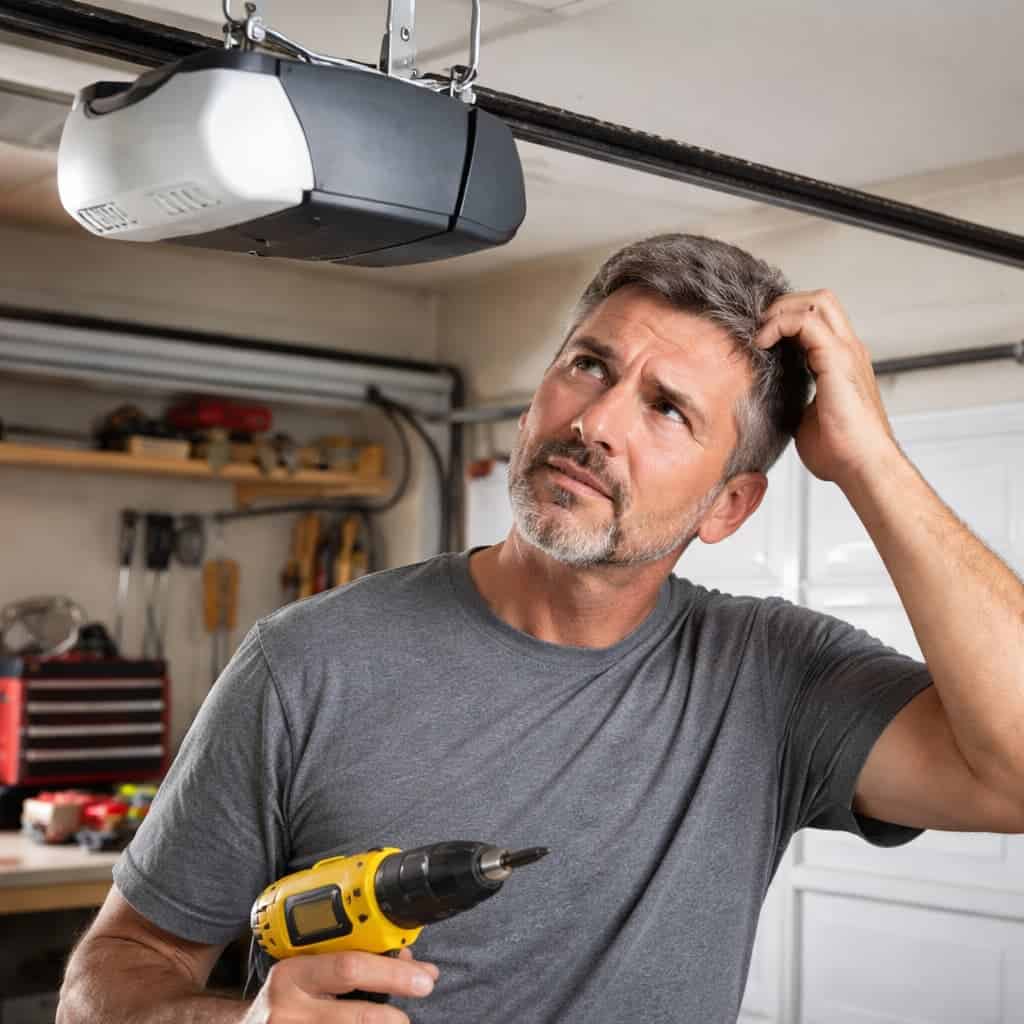
You can replace a garage door opener by yourself, but only if you have the right tools, plan carefully, and take the proper safety measures.
Table of Contents
ToggleMany homeowners consider replacing their garage door openers themselves. They typically make this choice to save money and to speed up the process. While this is certainly possible, such a project involves mechanical assembly, electrical connections, and precise alignment. These things are all necessary to ensure safe system installation and operation. If an opener is installed improperly, it can lead to property damage or even personal injury. Below, we’ll cover whether or not DIY garage door opener installation makes sense. We’ll also touch on choosing the right opener, the tools you’ll need, and important safety precautions to take.
Can You Replace a Garage Door Opener Yourself?
There are a couple of things you need to consider before deciding to replace your garage door opener yourself.
Skill Level and Time Required
According to the U.S. Consumer Product Safety Commission (CPSC), garage door systems contain powerful moving parts and safety devices designed to prevent injury. For these reasons, careful installation and testing are absolutely essential.
To install a garage door opener on your own, you should be comfortable using drills, ladders, and following the manufacturer’s instructions. On average, the project takes around four to six hours for someone with basic mechanical skills. The job involves assembling hardware, mounting the motor unit and connecting it to the door system, and safely handling the wiring.
DIY vs. Hiring a Professional
On average, DIY garage door opener installation can save you around $150 to $300 in labor costs. However, hiring a professional ensures proper alignment, calibration, and compliance with safety standards. According to the Occupational Safety and Health Administration (OSHA), equipment containing stored mechanical energy must be handled carefully. Otherwise, injury can occur.
Ultimately, for many homeowners, the increased peace of mind from hiring a professional outweighs the savings associated with DIY.
Selecting the Right Garage Door Opener
Before you start, you need to choose a garage door opener that matches your door’s size and weight. Heavier garage doors typically require stronger motors, usually rated at 1/2 horsepower or higher.
There are several types of openers available. These include chain-drive openers, belt-drive openers, screw-drive openers, and smart openers with Wi-Fi connectivity. According to the International Door Association (IDA), choosing properly rated equipment ensures better performance and longevity. You should always check compatibility with your current rail system before making a purchase.
Tools and Materials Needed
You will need several common tools if you want to replace your garage door opener. These include:
-
- Adjustable wrench
-
- Power drill
-
- Screwdrivers
-
- Stepladders
-
- Level
-
- Socket set
Additionally, you’ll need the opener kit, mounting brackets, safety sensors, and possibly extra lag bolts, depending on the structure of your ceiling.
Safety Precautions
It’s extremely important to take certain safety precautions before attempting the job. Additionally, because garage doors operate under significant tension, you should only install the new opener yourself if you’re properly trained. Otherwise, you could be seriously injured.
According to the National Institute for Occupational Safety and Health (NIOSH), garage doors can release stored energy unexpectedly. This can potentially cause severe injury. So, before you start working, be sure to disconnect the power to the door. It’s also essential that you always work with a sturdy ladder that’s positioned on flat, stable ground.
Step-by-Step Installation Guide
If you decide to replace your garage door opener yourself, you’ll want to adhere to the following steps.
Removing the Old Opener
First, you’ll need to unplug your existing garage door opener and disconnect it from the door. Then, carefully remove the mounting brackets and detach the rail system. You can then lower the motor and set it aside.
Assembling the New Opener
The next step is assembling your new opener. You should follow the manufacturer’s instructions for putting together the rail and trolley system. Make sure all of the bolts are tightened properly, but not overtightened.
Mounting the Opener Unit
Next, you can attach the motor unit to your ceiling joists using the appropriate brackets. It should be level and fastened securely to the supports.
Connecting to the Door and Track
Connect the opener arm to your garage door bracket. During this step, ensure that the trolley engages smoothly with the rail. When you manually operate the door, it should move freely.
Wiring and Electrical Connections
You will then need to install the wall control panel and connect the wiring according to the instructions. If your outlet isn’t already installed in the ceiling, then you’ll have to hire a licensed electrician to handle the wiring.
Installing Safety Sensors
Next, mount the photoelectric safety sensors near the bottom of the garage door tracks. These sensors prevent the door from closing if an object blocks the beam.
Programming the Remote Control
Finally, follow the manufacturer’s instructions to sync your remote and keypad with the new opener. For most units, there will be a “learn” button for pairing devices.
Testing and Troubleshooting
When you install a new garage door opener, it’s important to do some testing and troubleshooting to ensure everything’s working properly.
Testing the Garage Door Opener
When you’re finished with the installation, you should open and close your garage door several times. Make sure that the door is moving smoothly, without hesitation or excessive noise. Additionally, test the safety reverse feature by placing something small in the door’s path. When the door makes contact with the object, it should reverse immediately.
Troubleshooting Common Issues
If your garage door isn’t closing fully, check the sensor alignment. If the door reverses unexpectedly, follow the instructions to adjust its travel limits. If you encounter any persistent problems after the installation, it could mean the opener is incompatible or wasn’t properly installed.
Maintenance Tips for Longevity
There are several things you can do to extend the lifespan of your new garage door opener:
-
- Lubricate moving parts twice per year
-
- Regularly check sensor alignment
-
- Periodically tighten any loose hardware
-
- Replace the remote’s batteries as needed
It’s also prudent to regularly perform an inspection. Doing so will help ensure that small problems don’t turn into major, costly issues.
Frequently Asked Questions
Covered below are a few of the most commonly asked questions about replacing garage door openers.
Is it hard to replace your own garage door opener?
It can be somewhat challenging to replace your garage door opener. You’ll need to have basic mechanical skills, and it’s important to pay close attention to safety.
Can I just swap my garage door opener?
In some cases, yes—you can simply swap your garage door opener. This is only possible if the new opener is compatible with the existing rail system. That said, many manufacturers recommend replacing the rail for the best performance.
Can I replace a lost garage door opener?
Yes, you can purchase a replacement remote and reprogram it using the garage door opener’s “Learn” function.
Can I replace a garage door opener myself without changing the rails?
Sometimes you can, but compatibility varies depending on the brand and model. Plus, reusing rails may negatively impact the door’s performance or stability if the systems aren’t designed to match.


