
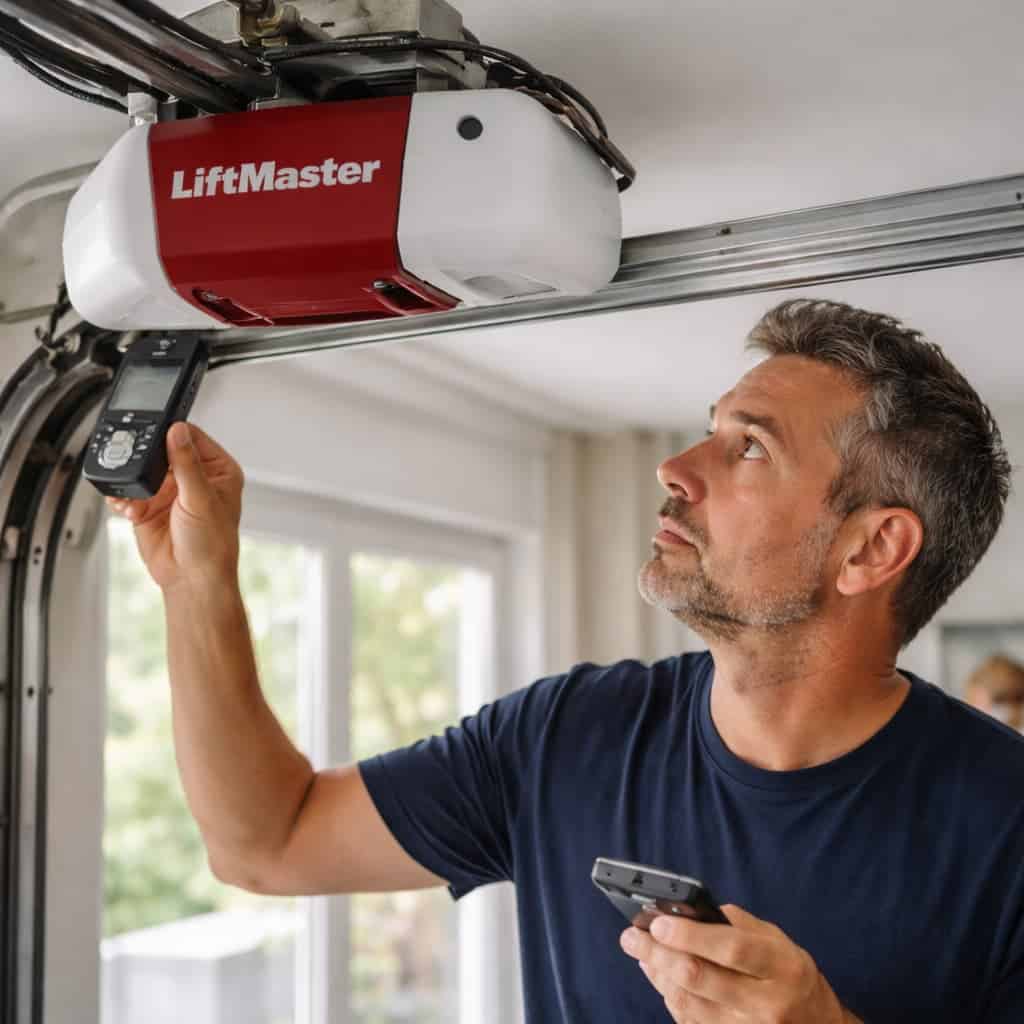
Your LiftMaster may not be working because of a power issue, locked controls, misaligned safety sensors, problems with the remote or keypad, or a fault with the motor or drive system.
Table of Contents
ToggleWhen your LiftMaster garage door opener stops working, it can have a major impact on your daily life, especially if your garage door is a primary entrance and exit for your home. Certain LiftMaster issues are easy to identify, while others involve parts or systems simply wearing out over time. When dealing with any of these issues, it’s important that you know what to check first and when to stop troubleshooting and contact a professional. In this article, we’ll cover common remote and keypad problems, what warning lights and beeps may mean, and how components like sensors, tracks, and motors can cause LiftMaster issues.
Quick Troubleshooting Checklist
Covered below are simple troubleshooting steps you can take when your LiftMaster stops working.
Verifying Power to the Opener
A common cause of LiftMasters not working is a lack of power. If the opener lights won’t turn on or the unit refuses to respond, it may have been unplugged, or the circuit breaker may have tripped. Alternatively, the outlet could be faulty. According to LiftMaster Support, checking the power supply should be one of the first troubleshooting steps you try.
Testing the Wall Button
If your LiftMaster remote isn’t working but the wall-mounted button is, that typically indicates a remote programming problem, dead batteries, or signal interference. However, if the wall button isn’t working either, the issue could be power-related, a locked control panel, or an internal board problem.
Checking Manual Operation
If your garage door won’t move at all, consider disconnecting the opener and checking the door’s manual movement. If the door isn’t lifting smoothly, the issue may be related to springs, rollers, or track alignment, as opposed to your LiftMaster.
Checking Power Source and Backup Systems
When your LiftMaster isn’t working, it’s always wise to check the power source and backup systems.
Ensuring Consistent Power Supply
Garage door openers need a stable supply of power to work properly. If your LiftMaster is only working intermittently, it could be due to a loose plug connection, a worn outlet, or a circuit issue. A surge protector can also fail over time, which can lead to inconsistent operation.
Handling Power Outage Modes
If your LiftMaster has a battery backup, its behavior may change during a power outage. For example, it may open more slowly or start beeping. According to LiftMaster Support, beeping often indicates that either a battery backup system or control panel needs attention.
Common Issues with Remotes and Keypads
There are several common issues that can occur with LiftMaster remotes and keypads.
Remote Control Malfunctions
Remote control issues are some of the most common problems with LiftMaster units. If the wall button is still working but the remote isn’t, then there’s a good chance the remote control is failing or malfunctioning.
Remote Battery Replacement
Sometimes, the issue with your LiftMaster could be as simple as dead batteries in the remote control. If the batteries are running out of juice, it can result in the remote’s signal weakening or inconsistency with the garage door.
Keypad Issues and Battery Replacement
Your LiftMaster’s keypad might stop responding if the battery is dead, the internal contacts are worn, or the unit has lost its connection to the opener. Battery replacement can often restore function to the unit, especially when the keypad display is dim or delayed.
Signal Interference
If your unit’s remote only seems to work when you’re very close to the garage, there may be a signal interference issue. Several things may disrupt the signal of your LiftMaster, including nearby electronics, security systems, and certain chargers.
Expired & Incorrect PIN Codes
If your LiftMaster’s PIN code was entered incorrectly too many times or the code was changed and forgotten, it may cause the keypad to fail. In some cases, the unit may need reprogramming or even a factory reset to remedy this.
Unresponsive Buttons
If your keypad’s buttons don’t respond or seem to “stick,” you may need to replace the keypad entirely. It’s also possible for sun exposure or weather changes to damage keypads when they’re mounted on exterior surfaces.
Diagnosing Visual and Auditory Alerts
Sometimes, a problem with your LiftMaster may be indicated by a visual or auditory alert.
Blinking Lights: Sensor or Lock Mode Issues
Many LiftMaster units use blinking lights to indicate that something’s wrong. Typically, flashing patterns point to a safety sensor misalignment, a detected obstruction, or “lock mode” being turned on. Your unit’s safety sensors are also designed to stop your garage door from closing if anything is detected in its path.
According to the U.S. Consumer Product Safety Commission (CPSC), garage door openers sold in the United States must include reversing systems.
Beeping Sounds: Battery Backup Warnings
If your LiftMaster starts beeping, it usually indicates a battery backup alert, a low battery, or an accessory control panel warning.
Addressing Sensor and Track Problems
There are a couple of effective ways to address problems with your LiftMaster’s sensor or track.
Aligning Safety Sensors
If your LiftMaster starts to close but then immediately reverses, its sensors could be blocked, dirty, or misaligned. This can happen very easily when doing routine tasks, such as sweeping the garage, bumping a sensor, or storing your items too close to the sensor beam.
Ensuring Proper Track and Roller Alignment
Your LiftMaster may also stop working if the garage door is binding on its track. Issues like bent track sections, worn rollers, or loose hardware can all prevent the door from moving smoothly. These are all important problems to check for if your opener isn’t functioning properly.
Motor and Drive System Troubleshooting
In some cases, the issue with your LiftMaster may be related to motor or drive system problems.
Overheating Motor Diagnostics
If your LiftMaster works for a few cycles but then stops functioning, the motor could be overheating. This often occurs when the garage door is too heavy due to worn springs. It can also happen when the opener is straining against friction with the track system.
Dealing with Grinding Noises
If you’re hearing grinding noises, that can indicate issues like worn gears, a damaged sprocket, or internal drive problems. If you continue operating your LiftMaster when it’s making grinding noises, it may lead to complete garage door failure.
Programming, Resetting, and Reprogramming
Sometimes, you may need to program, reset, or reprogram your LiftMaster.
Steps to Program Your Garage Opener
To program your LiftMaster, you typically need to use the “Learn” button on the opener and then pair the remotes or keypads. Your remote may need to be re-paired if it has suddenly stopped working after a storm or power outage.
Proper Ways to Reset the Device
If several of your remotes stop working at once or your devices are behaving inconsistently, you may need to reset your LiftMaster device. A reset may also be necessary if your opener is stuck in an unusual operating mode after an electrical disruption.
Reprogramming Your Opener and Remote
If you ever have to factory reset your opener, you’ll have to reprogram all of the remotes and keypad codes. This is also necessary after you move into a new house, replace a keypad, or add new access devices.
Preventive Maintenance Tips
The following preventative maintenance tips can help you keep your LiftMaster functioning properly.
Regular Inspection Schedule
It’s wise to inspect your LiftMaster at least once every few months. For example, you should check the garage door for smooth movement, listen for unusual noises, and check sensor alignment.
Keeping Tracks and Parts Clean
Keeping your LiftMaster’s tracks and other parts clean can go a long way toward keeping the unit healthy. Issues like dirty tracks, debris in the rollers, and dust buildup around sensors can all cause your opener to randomly fail. According to Chamberlain Support Group, it’s also recommended to regularly test the safety reversal system.
When to Call a Professional
With certain LiftMaster problems, your best course of action is to contact a trained professional.
Safety Concerns and Complex Repairs
If your garage door feels heavy, is struggling to lift manually, is slamming shut, or appears uneven, then the problem may involve high-tension components. In these situations, it’s best to contact a professional, as they’ll have the experience and equipment to conduct the repair safely.
Signs You Need Expert Help
You should recruit a garage door expert if you notice repeated reversing, persistent sensor errors, or grinding noises from your LiftMaster. It’s also best to contact a professional if the motor is running but is unable to move the garage door.
Frequently Asked Questions
Covered below are answers to a few of the most commonly asked questions regarding malfunctioning LiftMasters.
Why did my LiftMaster garage door opener suddenly stop working?
The most common reasons for LiftMaster failure include loss of power, a tripped breaker, an obstructed sensor, and remote or keypad issues. Your unit may also fail suddenly in the case of internal components being worn out or the system detecting resistance and shutting down automatically for safety.
How do I reset the LiftMaster garage door opener?
The specific steps depend on your exact LiftMaster model. However, you can typically reset your opener by pressing the “Learn” button to clear devices and reprogram the unit.
Why would my garage door openers stop working?
If multiple remotes stop working simultaneously, it’s typically a result of signal interference, a power disruption, “Lock” mode, or the opener losing its paired device settings.
Why is my garage door not responding to remotes and/or keypad?
This can happen for a variety of reasons. These causes include dead batteries, signal interference, lost programming, or keypad PIN errors. However, if the wall button is still working, then the issue is probably related to remote or keypad communication as opposed to the opener’s motor or drive system.


